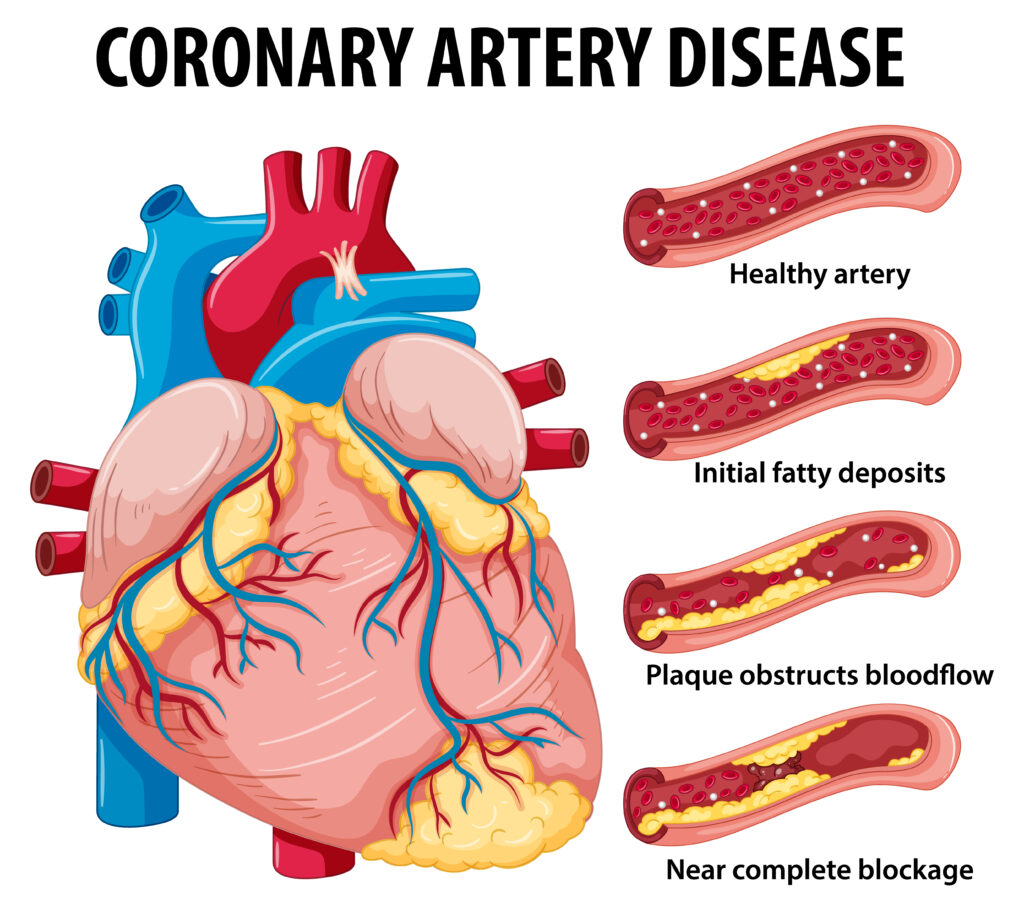
Restriction or blockage of the blood flow in the arteries of the heart may result in serious complications such as chest pain, heart attack, or heart failure. This blockage is often due to coronary artery disease, when fatty deposits, calcium, and cholesterol are collected inside the arteries over time.
The treatment will depend on the degree of blockage, whether it is partial or complete, and how much it is affecting the heart muscle. The prognosis can be significantly improved by early diagnosis and timely treatment.
What Is Coronary Artery Disease?
Coronary artery disease (CAD) is a condition in which the arteries that supply oxygen-rich blood to your heart muscle narrow or block. This reduces blood flow and puts stress on the heart.
A total occlusion that persists for more than three months is commonly referred to as a chronic total occlusion (CTO). These are some of the more complex types of coronary blockage, often requiring advanced intervention.
Who Is at Risk of Developing Heart Artery Disease?
Several factors increase the risk of developing heart artery disease, including:
- High blood pressure
- Diabetes
- Smoking
- High cholesterol
- Obesity
- Sedentary lifestyle
- Family history of heart disease
Patients with these risk factors should undergo regular heart evaluation, especially if symptoms appear.
Symptoms of a Blocked Coronary Artery
Symptoms may vary depending on the extent of the artery blockage. Common signs include:
- Chest pain or pressure
- Shortness of breath
- Fatigue
- Sweating
- Pain radiating to the arm, jaw, or back
- Reduced exercise tolerance
Symptoms may not be present until the blockage is substantial, especially in the case of heart artery disease that progresses slowly.
How Is Heart Artery Disease Diagnosed?
Before planning treatment, your heart specialist may recommend:
- ECG (Electrocardiogram)
Checks the electrical activity of the heart.
- Echocardiogram
Evaluates heart-pumping function.
- Stress Test
Assesses how the heart performs under exertion.
- CT Coronary Angiography
Helps visualise narrowing in coronary vessels.
- Coronary Angiography
The gold-standard test for confirming heart artery disease and identifying the exact location of the blockage.
Common Treatment Strategies for Coronary Artery Disease
Treatment for heart artery disease depends on whether the blockage is mild, severe, or fully occluded.
Medications for Early or Mild Heart Artery Disease
In less severe cases, treatment may begin with medication, including:
- Blood thinners
- Cholesterol-lowering medicines (statins)
- Beta blockers
- Blood pressure medicines
- Nitrates
These help reduce symptoms and prevent disease progression.
Lifestyle Changes That Support Recovery
Lifestyle management remains essential in all stages of heart artery disease:
- Stop smoking
- Follow a heart-healthy diet
- Exercise regularly
- Control diabetes and blood pressure
- Maintain a healthy weight
- Reduce stress
These changes can improve long-term heart health and reduce future blockages.
When Is Angioplasty Needed?
If the blockage is severe enough to restrict blood flow, you may be told you need to have angioplasty. This minimally invasive procedure involves using a balloon to open the blocked artery and frequently includes placing a stent.
It is one of the most effective treatments for coronary artery disease when medication alone is not sufficient.
When Is Rotablation Used?
Not all blocked arteries can be treated with standard angioplasty. Some blockages become heavily calcified, making them difficult to open.
You may need to have a rotablation procedure in such cases. Rotablation uses a high-speed rotating burr to break up calcium deposits before stenting. This advanced technique is especially valuable in complex heart artery disease and chronic total occlusions.
Dr. Omar Aziz Rana is well-known for his use of advanced interventional techniques to treat high-risk, calcified coronary lesions.
When Is Bypass Surgery Recommended?
Coronary artery bypass grafting (CABG) may be advised when:
- Multiple arteries are blocked
- The left main artery is involved
- Angioplasty is not suitable
- The blockage pattern is too complex
This is often considered in advanced heart artery disease, where long-term re-establishment of blood flow is required.
Can a Completely Blocked Artery Be Treated Without Surgery?
In some instances, yes. Many chronic total occlusions can be opened using advanced catheter-based techniques, thereby avoiding open-heart surgery. This depends on:
- Location of blockage
- Duration of occlusion
- Calcium severity
- Heart muscle viability
A specialist evaluation is necessary to decide the best option.
What Is Recovery Like After Treatment?
Recovery varies by procedure:
- Medication management: immediate return to routine
- Angioplasty/stenting: usually 2–7 days
- Rotablation: similar to angioplasty but depends on complexity
- Bypass surgery: several weeks
Following medical advice and lifestyle changes is critical after treatment for heart artery disease.

Questions to Ask Your Heart Specialist
Before treatment, ask the following questions:
- How severe is my blockage?
- Is it partial or complete?
- Can angioplasty treat it?
- Do I need rotablation?
- Is bypass surgery necessary?
- What are the risks and recovery time?
These questions help patients make informed decisions.
Expert Care for Complex Heart Artery Disease
Treatment for heart artery disease requires the right diagnosis, timing, and intervention. Some may be cleared with medicines and stents, while others may require more advanced procedures such as rotablation or bypass surgery.
When dealing with complex and calcified coronary blockages, consulting an experienced specialist like Dr. Omar Aziz Rana can significantly improve treatment outcomes and support better long-term heart health.
FAQ
How to clear blocked arteries without surgery?
Mild coronary artery disease is often treated with medicines, lifestyle changes, and control of risk factors. Serious blockages usually need medical procedures.
What is the treatment for a 70 percent heart blockage?
A 70 percent blockage in the heart can be treated with medications or angioplasty depending on the symptoms and how much the blood flow is limited.
What is coronary artery occlusion treatment?
Coronary artery occlusion treatment may include medication, stenting, rotablation, or bypass surgery based on the blockage type.
What is chronic total occlusion treatment?
Chronic total occlusion treatment usually involves advanced angioplasty or, in complex cases, bypass surgery.
What is the chronic total occlusion survival rate?
The outlook depends on heart function, blockage severity, and timely treatment. Many patients recover well with proper care.
What is the best treatment for coronary artery disease?
The best treatment for coronary artery disease depends on blockage severity, ranging from medicines to angioplasty or surgery.