Expert Rotablation
Procedures by
Dr. Omar Aziz Rana
Dr Omar Aziz Rana is a leading heart specialist at Omar Hospital Lahore, an expert in rotablation and advanced cardiac care. Dedicated to patient well-being, he delivers advanced, minimally Invasive Treatment for Complex Coronary Artery Disease.
What is Rotablation?
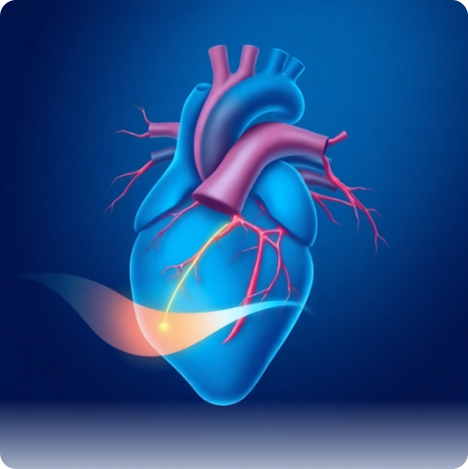
Rotablation or rotational atherectomy is a special procedure used to treat heavily calcified deposits in the arteries supplying blood to your heart. Up to 25% of patients undergoing a coronary angiogram will have calcium deposits of various degrees. Almost half of these patients will have severe calcification. Certain factors increase the risk of calcification of coronary arteries, such as increasing age, diabetes mellitus, high blood pressure, chronic kidney disease and previous coronary artery bypass grafting (CABG).
Under normal circumstances, in non-calcified arteries, a wire is advanced across the coronary stenosis (narrowing due to cholesterol buildup over time), and this is then squashed with a balloon catheter once inflated against the wall of the artery. Subsequently, this is usually followed by the insertion of a stent, which is like a tubular metallic mesh with a special drug coating in most cases. In heavily calcified arteries, however, standard balloon angioplasty may not work as the narrowing may be non-crossable or non-expandable, requiring a rotablation procedure.
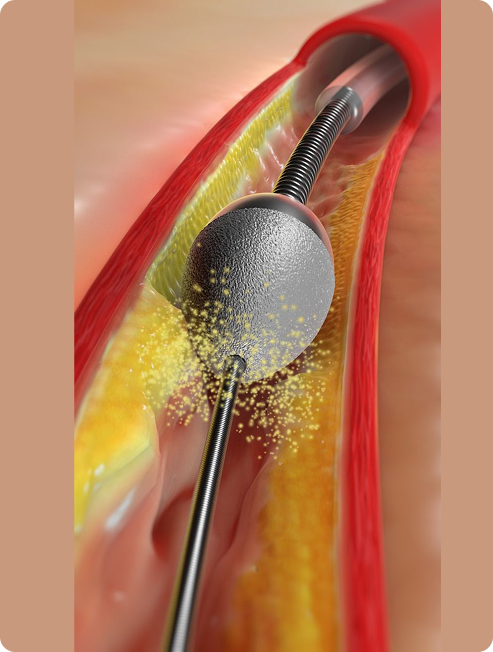
Rotablation is a technique by which special olive-shaped catheters or rotablator burrs with diamond crystals embedded on them are rotated at high speeds of 140,000 – 180,000 revolutions per minute and gradually advanced across the calcified narrowing. The calcium particles that are broken down through this maneuver are typically very small, even smaller than blood cells and are cleared from the circulation of the heart. The calcium particles are broken down into tiny fragments smaller than blood cells and cleared from circulation. This process allows a balloon catheter to expand fully and facilitates stent insertion, completing the coronary rotablation safely and effectively.
This procedure is performed under local anaesthesia and is not painful, although some patients may experience minor chest discomfort momentarily. As rotablation angioplasty is a complex technique and requires years of practice and training, be mindful of the doctor’s experience when selecting your cardiologist or heart specialist to undergo this procedure.
Dr. Omar Aziz Rana
- Profile
- Publications
- Qualifications
- Workshops/Proctorship
- Case Examples
Name:
Dr Omar Aziz RANA
Date of Birth
30 January 1978
Sex:
Male
Addess
731-E, Street 22, Phase 6, DHA, Lahore, Pakistan.
Telephone:
(+92) 03028424222
Nationality:
British Citizen
E-mail:
omarrana78@gmail.com
Dr Omar Aziz Rana is a Consultant Interventional Cardiologist based at Omar Hospital Lahore who attended the prestigious King Edward Medical University. Subsequently, he completed his post-graduate Medical and Cardiology training in the U.K.
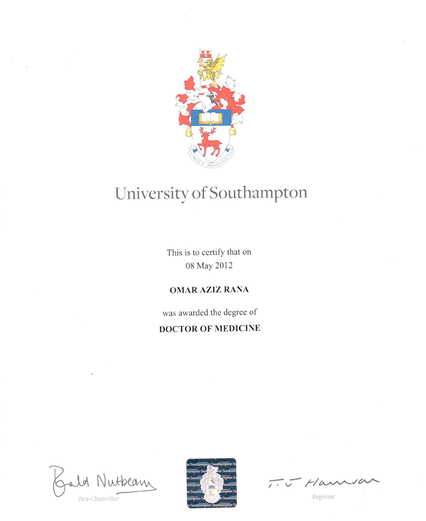
Following the successful attainment of his Royal College of Physicians membership (MRCP), Dr Rana embarked on a two-year post-graduate doctorate research focussing on the effects of hypoglycaemia (low blood sugar) on the circulation of blood flow in human coronary arteries. His research was published in high impact factor peer-review journals. He successfully defended his thesis and was awarded his Doctorate in Medicine (DM) from the University of Southampton. He was awarded the Scientific Investigator of the Year Award by the British Society of Echocardiography in 2010. He has co-authored dozens of papers and book chapters and continues to pursue original research in the arena of Interventional Cardiology and hopes to increase the representation of Pakistan in International forums through increased collaboration. Dr Rana is an editor for the Pakistan Heart Journal and Pakistan Journal of Cardiovascular Intervention.
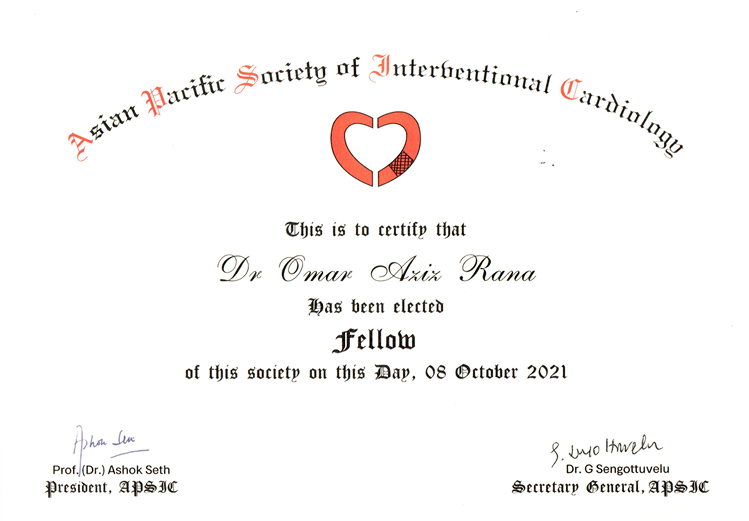
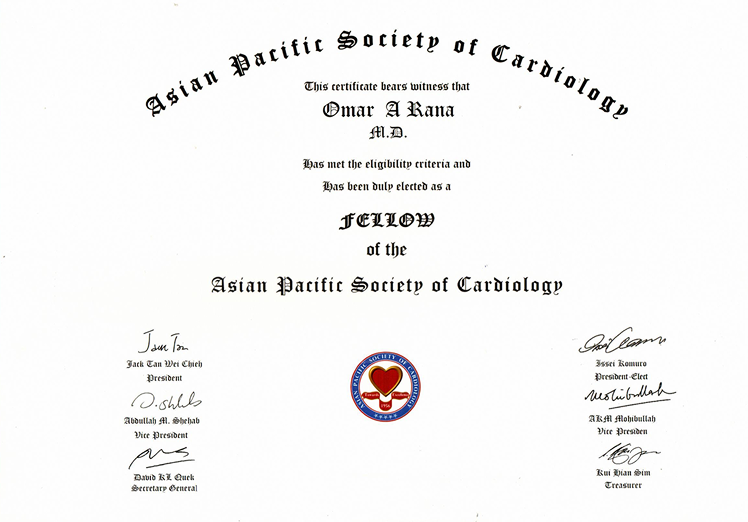
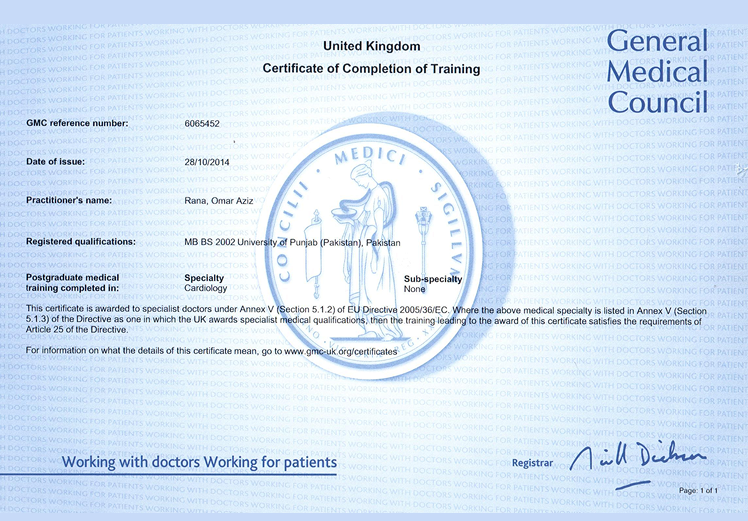
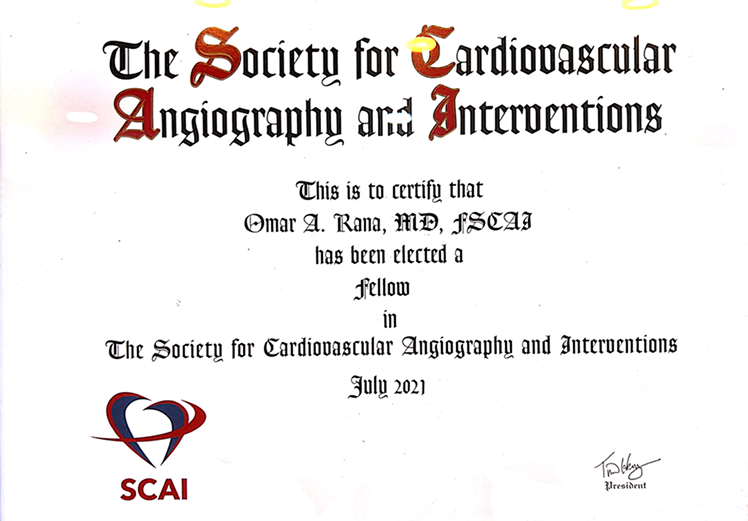
Dr Rana has been awarded a Completed Certificate of Specialist Training (CCT) by the General Medical Council (U.K.) for successfully completing his training programme in Cardiology. Dr Rana is a Fellow of the Royal College of Physicians (FRCP) of London, Edinburgh and Glasgow as well as a Fellow of the European Society of Cardiology (FESC), Asian Pacific Society of Cardiology (FAPSC), Asian Pacific Society of Interventional Cardiology (FAPSIC) and Society for Cardiovascular Angiography and Interventions (FSCAI). Dr Rana is also an examiner for the Royal College of Physicians, UK.
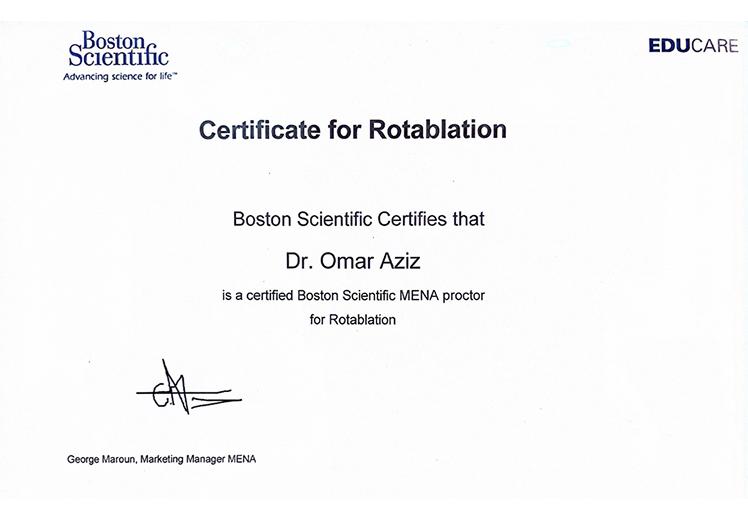
Subsequently, he completed a 2-year Advanced Interventional Cardiology training programme at the prestigious Royal Bournemouth Hospital, which is one of the busiest state-of-the-art Interventional Cardiology units in the U.K. He has been fully trained in Interventional Cardiology and specialises in the use of rotational atherectomy (rotablation), laser atherectomy, intravascular ultrasound, haemodynamic assessment of coronary arteries using pressure wire, optical coherence tomography and the treatment of chronic total occlusions. Dr Rana is a certified Boston Scientific (USA) proctor for rotablation in Pakistan and has successfully proctored cases in many private and government hospitals all over Pakistan.
Dr Rana maintains an honest and sincere approach towards the care of his patients and believes in the ethos of patient choice. He also values a team-based model of care including the involvement of surgical colleagues, radiology colleagues, junior doctors, nurses and allied health-care professionals to drive patient care forward in the most productive and result-oriented direction. It is with these values and credentials that he has returned to Lahore, the city at the center of his heart, to fulfil a shared dream of serving patients to the best of one’s abilities and integrity.
Publications
Rana OA, Khan HA, Khokhar MH.
Successful retrieval of a stalled rotational atherectomy burr: A case report and review of literature. Pak J Cardiovasc Interv. 2025;5(1).
Rana OA, Iqbal MS.
Successful treatment of an under expanded stent using rotational atherectomy: first reported case of stent ablation from Pakistan. Pak J Cardiovasc Interv. 2024;4(1):53-59.
Rana O, Whittaker A, O'Kane P.
Late stent thrombosis: More than meets the eye? Pak Heart J. 2018;51:179-181.
Kodoth V, Rana O, Sambu N, Ratib K, Johnston P, Large A, Nolan J, deBelder A, Din J, Talwar S, O'Kane P.
Establishing interventional technologies to treat under expanded stents: a role for excimer laser coronary atherectomy? Pak Heart J. 2018;51:82-5.
Rana O, Vawdrey D, Simpson I, Calver A, Corbett S, Wilkinson J, Gray H, Curzen N.
Comparison of outcomes in Primary PCI according to arterial access site: A four-year single centre observational study. Pak Heart J. 2017;50:71-8.
Quah J, Carlton E, Rana O, Byrne CD, Senior R, Anstey C, Greaves K.
Insulin-induced hypoglycaemia and the detection of myocardial injury using an ultra-sensitive troponin assay. Int J Cardiol. 2016;215:446- 448.
Rana O, Talwar S, O'Kane P.
Excimer Coronary Laser Atherectomy during Percutaneous Coronary Intervention of Complex Lesions: Balloon Failures, Chronic Total Occlusions and Under-Expanded Stents. Laser in Cardiovascular Medicine. Edited by On Topaz. (Book Chapter). Springer 2015.
Sharma V, Jadhav ST, Harcombe AA, Kelly P, Mozid A, Bagnall A, Richardson J, Egred M, McEntegart M, Oldroyd K, Viswanathan G, Rana O, Talwar S, Macpherson M, Strange JW, Hanratty CG, Walsh SJ, Spratt J, Smith WHT.
Impact of proctoring on success rates for percutaneous revascularization of coronary chronic total occlusions. Open Heart. 2015.
Whittaker A, Green P, Coverdale G, Rana O, Levy T.
The incidence of cardiac surgery following percutaneous coronary intervention: Insights from a high-volume nonsurgical centre in the UK. Br J Cardiol. 2015;22:1-4.
Rana O, Shah N, Wilson S, Swallow R, O’Kane P, Levy T.
The impact of routine and IVUS-guided high-pressure post-dilatation after drug eluting stent implantation. The STOP (STent OPtimisation) study. Invasive Cardiol. 2014;26:640-646.
Rana O, Sastry S, Fath-Ordoubadi F, Mamas M, Talwar S, Din J, O’Kane P.
World’s First Series of Left Main Bifurcation Treated with the AXXESS 4.0 X 9 mm Dedicated Bifurcation Stent. J Am Coll Cardiol. 2014;64:B68
Curzen N, Rana O, Nicholas Z, Golledge P, Zaman A, Oldroyd K, Hanratty C, Banning A, Wheatcroft S, Hobson A, Chitkara K, Hildick-Smith D, McKenzie D, Calver A, Dimitrov BD, Corbett S.
Does routine pressure wire assessment influence management strategy at coronary angiography for diagnosis of chest pain? The RIPCORD study. Circ Cardiovasc Interv. 2014;7:248-255.
Fairley SL, Spratt JC, Rana O, Talwar S, Hanratty CG, Walsh SJ.
Adjunctive strategies in the management of resistant, ‘undilatable’ coronary lesions after successfully crossing a CTO with a guidewire. Current Cardiology Reviews. 2014;10:145-157.
Rana O, Byrne CD, Greaves K.
Intensive Glucose Control, Hypoglycaemia and Cardiovascular Mortality: A New Cardiovascular Risk Factor? Heart. 2014;100:21-27.
Rana O.
Book Review: Bifurcation Stenting. Br J Cardiol. 2013;20:80.
Rana O, Moran R, O’Kane P, Boyd S, Swallow R, Talwar S and Levy T.
Percutaneous Coronary Intervention in the Very Elderly (≥85 years): Trends and Outcomes. Br J Cardiol. 2013;20:27-31.
Rana O.
Book Review: Journey into the Heart: A Tale of Pioneering Doctors and their Race to Transform Cardiovascular Medicine. Cardiology News. 2012;16;24.
Rana O, Byrne CD, Kerr D, Coppini DV, Zouwail S, Senior R, Begley J, Walker J, Greaves K.
Acute Hypoglycemia Decreases Myocardial Blood Flow Reserve in Type 1 Diabetes and in Healthy Humans. Circulation 2011; 124:1548-1556.
Rana O, Barlow C and Reid C.
Splenic Artery Aneurysm-A Rare but Potentially Fatal Complication of Infective Endocarditis. Echo. April 2011; 73:25-26
Rana O, Kerr D, Zouwail S, Coppini DV, Begley J, Byrne CD, Senior R and Greaves K.
The Effect of Insulin and Insulin-induced Hypoglycemia on Myocardial Blood Flow Reserve in Patients with Complicated Type 1 Diabetes Mellitus. Circulation. 2010; 122:S
Rana O, Byrne, CD and Greaves K.
K. Intensive Insulin Therapy in the Intensive Care Unit, Hypoglycemia, and Cardiovascular Mortality. Hosp Pract. 2010; 38: 59-66.
Rana O, Zouwail S, Coppini DV, Senior R, Begley J, Kerr D, Byrne CD and Greaves K.
The Effect of Insulin-induced Hypoglycemia on Myocardial Blood Flow in Patients with Type 1 Diabetes Mellitus. Circulation. 2009; 120:S368
Rana O, Gonda P, Addis B and Greaves K.
Intra-pericardial Paraganglioma Presenting as Chest Pain. Circulation. 2009; 119:e373-e375.
Rana O, Zouwail S, Begley J, Kerr D, Coppini D V, Senior R, and Greaves K.
The Effect of Insulin and Insulin-induced Hypoglycaemia on Myocardial Blood Flow and Endothelin-1 Levels Using Myocardial Contrast Echocardiography. Eur Heart J. 2009; S456.
Rana O, Davies S, Thomas P, Kerr D, Coppini D V and Greaves K.
The Effect of Insulin and Hypoglycaemia on Myocardial Blood Flow in Healthy Subjects. Diabetes. 2009; Suppl:634-P.
Rana O, Greaves K, Shepherd D, Parvin S, Swallow R.
Saphenous vein graft aneurysm-an incidental finding. BMJ Case Reports. March 2009.
Rana O and Greaves K.
Cardiac remodeling in Heart Failure. Problem solving in heart failure (Book Chapter); Clinical Medicine. 2009.
Rana O and Greaves K.
Systolic Heart Failure. Problem solving in heart failure (Book Chapter); Clinical Medicine 2009.
Rana O, Swallow R, Senior R and Greaves K.
Detection of myocardial ischemia caused by coronary artery-left ventricular fistulae using myocardial contrast echocardiography. Eur J Echocardiog. 2009;10: 175-177.
Rana O and McCrea W.
Cholesterol Emboli after Coronary Angioplasty. New Eng J of Med. 2006; 354:1294.
Nabi MS, Randhawa FA, Rana O, Khalil A, Hussain S.
Malignant Chylothorax Treated by Talc Pleurodesis: A Case Report and Review of the Literature. International J of Oto, Rhino Laryng. 2003;5: 15-17.
Qualifications/Affiliations
International Advisor for RCPSG for Pakistan
Aug 2025
Fellow of the Asian Pacific Society of Interventional Cardiology (FAPSIC)
Sept 2021
Fellow of the Society for Cardiovascular Angiography and Interventions (FSCAI)
July 2021
Fellow of the Asian Pacific Society of Cardiology (FAPSC)
Nov 2019
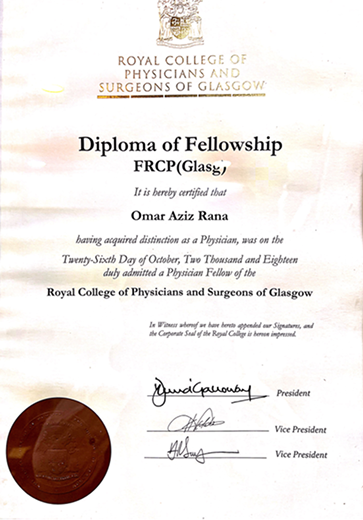
Fellow of the Royal College of Physicians of Glasgow (FRCP)
Oct 2018
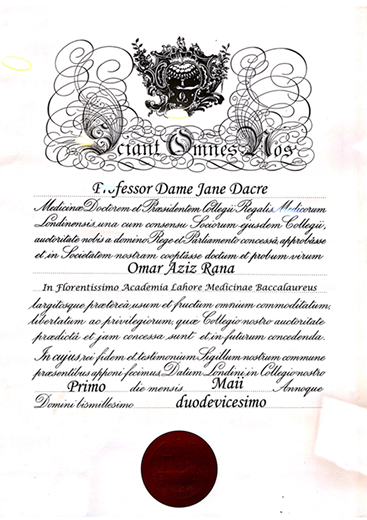
Fellow of the Royal College of Physicians of London (FRCP)
May 2018
Fellow of the Royal College of Physicians of Edinburgh (FRCP)
Jan 2018
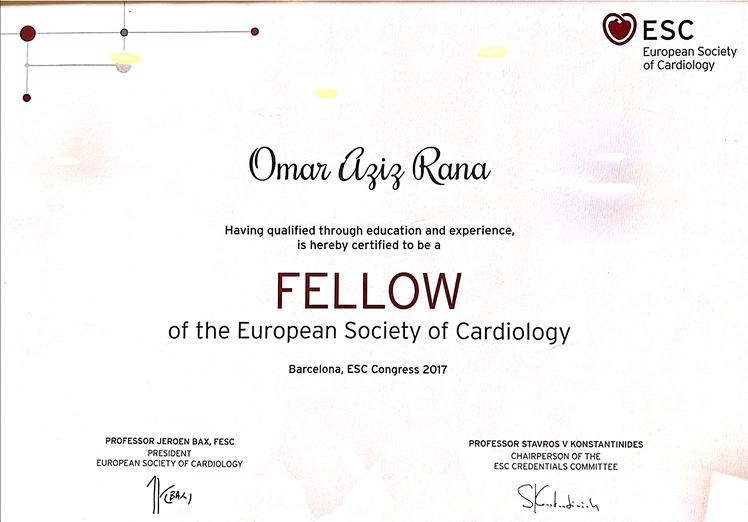
Fellow of the European Society of Cardiology (FESC)
Dec 2016
Completed Certificate of Specialist Training (CCT-Cardiology)
Sept 2014
Knowledge Based Assessment (KBA)
British Cardiovascular Society
June 2012
Doctor of Medicine (DM-Research)
University of Southampton
April 2012
British Society of Echocardiography
Dec 2009
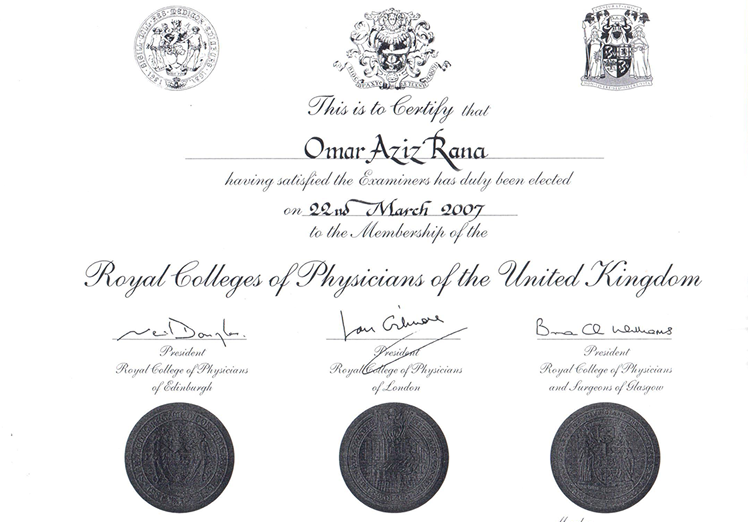
MRCP (UK)
March 2007
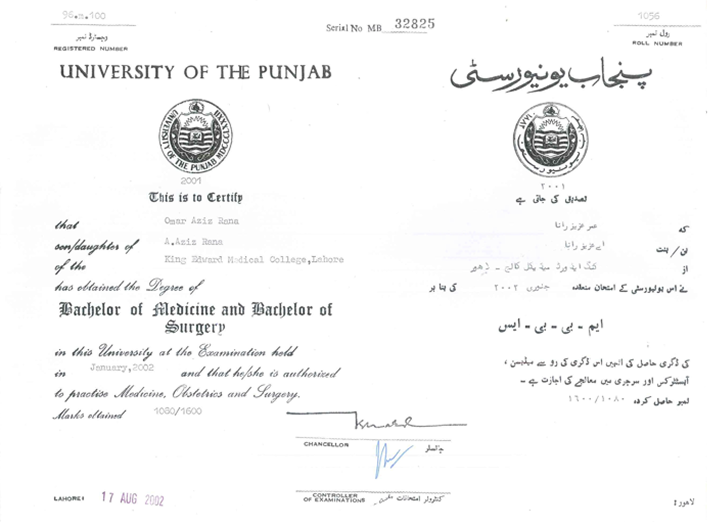
M.B.B.S
King Edward Medical College Lahore Pakistan
May 2002

Conferences/Workshops/Proctorship
| No. | Event Name | City / Venue | Date |
|---|---|---|---|
|
1
|
Rotablation Workshop (Proctor) |
RIC, Rawalpindi |
20/02/2025 |
|
2 |
Rotablation Workshop (Proctor) |
FIC, Faisalabad |
21/12/2024 |
|
3 |
CardioCON 2024 (Faculty) |
Lahore, Pakistan |
08-10/11/2024 |
|
4 |
ESC 2024 (Faculty) |
London |
30/08/2024–02/09/2024 |
|
5 |
PakLive 2024 |
Karachi |
18-21/04/2024 |
|
6 |
Rotablation Workshop (Proctor) |
FIC, Faisalabad |
16-17/02/2024 |
|
7 |
Rotablation Workshop (Proctor)
|
FIC, Faisalabad |
06/07/2023 |
|
8 |
PakLive 2023 |
Swiss Hotel, Lahore |
27-30/04/2023 |
|
9 |
CardioCON 2022
|
PC Hotel, Peshawar
|
18-20/11/2022 |
|
10 |
CTO Essentials
|
Hilton, Bakirkoy, Istanbul
|
27-29/10/2022 |
|
11 |
Pak Live 2022 |
Serena Hotel, Islamabad |
11-14/02/2022 |
|
12 |
PACVTS 2022 |
Lahore |
21-22/05/2022 |
|
13 |
AiCT Asia PCR |
Virtual |
8-9/10/2021 |
|
14 |
Euro PCR 2021 |
Virtual |
18-20/05/2021 |
|
15 |
ACC 2021 |
Virtual |
15-17/05/2021 |
|
16 |
Rotablation Workshop (Proctor)
|
HMC, Peshawar |
28-29/05/2021 |
|
17 |
Rotablation Workshop (Proctor)
|
FIC, Faisalabad |
07/04/2021 |
|
18 |
CTO Summit 2021 |
Virtual |
19-20/02/2021 |
|
19 |
Rotablation Workshop (Proctor) |
SZH, Lahore |
08/03/2020 |
|
20 |
Rotablation Workshop (Proctor) |
HMC, Peshawar |
27-28/09/2019 |
|
21 |
European Society of Cardiology
|
Paris, France |
31/08–04/09/2019 |
|
22 |
Rotablation Workshop (Proctor)
|
SZH, Lahore |
07/04/2019 |
|
23 |
Pakistan Live 2019
|
Lahore, Pakistan |
4-6/04/2019 |
|
24 |
Pakistan Hypertension League 2019 |
Lahore, Pakistan |
22-24/02/2019 |
|
25 |
Rotablation Workshop (Proctor) |
SZH, Lahore |
13/02/2019 |
|
26 |
Rotablation Workshop (Proctor) |
SZH, Lahore
|
30/01/2019 |
|
27 |
Rotablation Workshop (Proctor)
|
SZH, Lahore |
09/01/2019 |
|
28 |
Rotablation Workshop (Proctor) |
SZH, Lahore
|
10/10/2018
|
|
29 |
TCT 2018
|
San Diego, USA
|
20-25/09/2018 |
Angiographic Findings: A case of heavily calcified left anterior descending artery
Intervention: Rotablation is being performed with a 1.25 mm burr at 180,000 (rpm)
Outcome: Excellent angiographic result with complete symptom resolution at 6-month follow-up