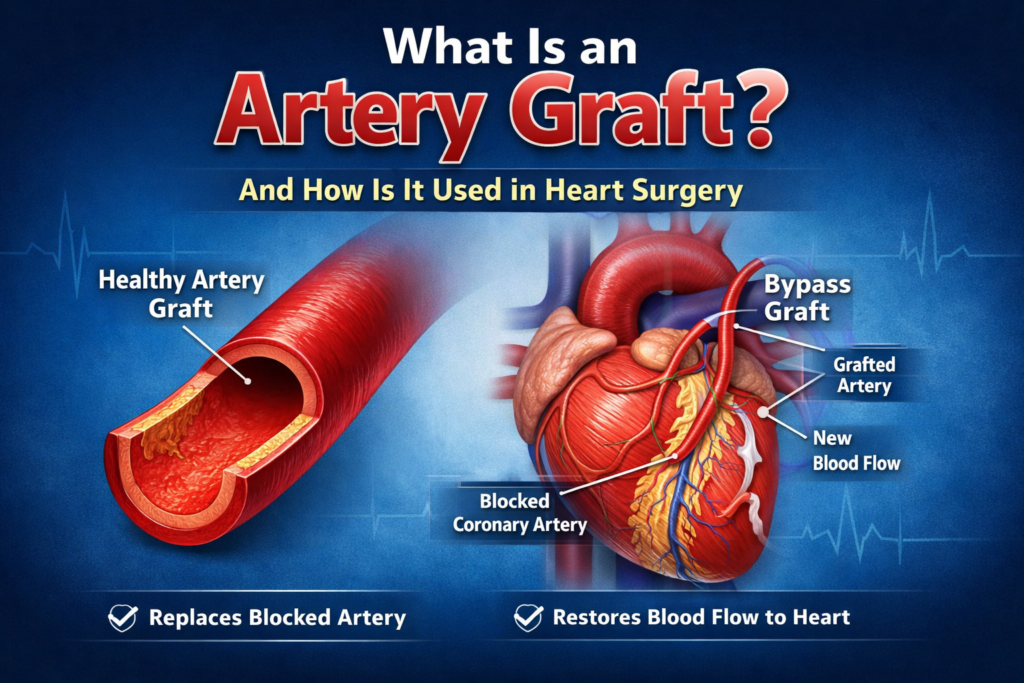
When blockages in your heart arteries become severe, standard treatments like stents may not be enough. Artery grafts are a powerful solution used in heart surgery. This helps in restoring blood flow, relieve chest pain, and improve overall heart function.
If you want to understand how artery grafts work, the types of vessels used, and what recovery looks like, the information below will guide you step by step. Keep reading to learn why this procedure is often the best choice for patients with complex coronary artery disease.
Understanding Artery Grafts in Heart Surgery
An artery graft is a blood vessel used that is used in heart surgery to bypass blocked or narrowed coronary arteries. It helps restore proper blood flow to the heart muscle. This reduce the risk of heart attacks and improving heart function.
Artery grafts are usually performed in patients of coronary artery disease and coronary heart disease when other measures such as stents are not effective. The graft may be removed off a patient as his own arteries of the heart, off an arm or a leg, and is then carefully attached to go around the blockage.
This practice is a central element of current heart surgery, and commonly is executed by a seasoned heart surgeon such as Dr. Omar Aziz Rana, an expert of hi-tech heart procedures.
What Are Artery Grafts?
Artery graft refers to a section of a blood vessel that serves as an alternative route through which the blood can circulate about a blocked or constricted coronary artery. In contrast to stents which open up an existing artery, artery grafts make a new channel of oxygen-rich blood flow to the heart.
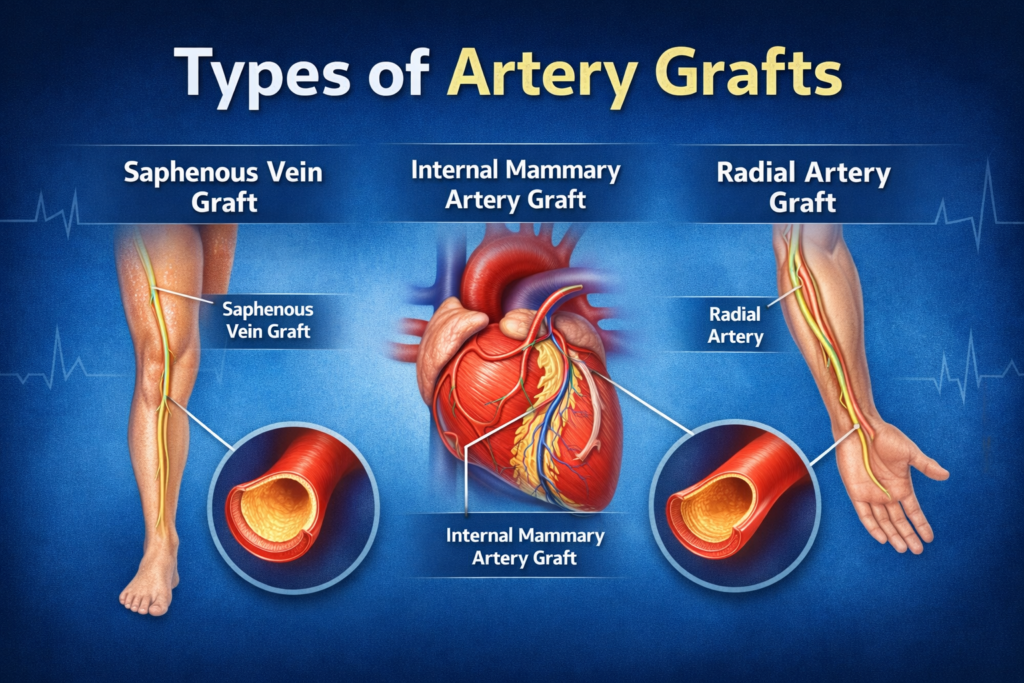
Common types of artery grafts include:
- Internal mammary artery (chest): Often used for long-term durability in heart surgery
- Radial artery (arm): Suitable for specific coronary arteries
- Saphenous vein (leg): Sometimes used when additional grafts are needed
The choice of graft depends on the severity of patient’s condition, age, and heart disease. Using artery grafts instead of veins often leads to longer-lasting results.
How Are Artery Grafts Used in Heart Surgery?
Artery grafts are primarily used in coronary artery bypass graft surgery (CABG), a type of heart surgery that reroutes blood around blocked arteries. The procedure generally involves these steps:
- Harvesting the vessel: The surgeon carefully removes the artery or vein from the donor site (chest, arm, or leg).
- Bypassing blockages: The graft is attached above and below the blocked section of the coronary artery.
- Restoring blood flow: Blood is rerouted through the graft, improving oxygen delivery to the heart muscle.
- Completing the procedure: Once all necessary grafts are in place, the heart is monitored, and the incision is closed.
This procedure is considered a gold standard for severe coronary artery disease and is performed by a highly skilled heart specialist to secure maximum success.
Benefits of Artery Grafts in Heart Surgery
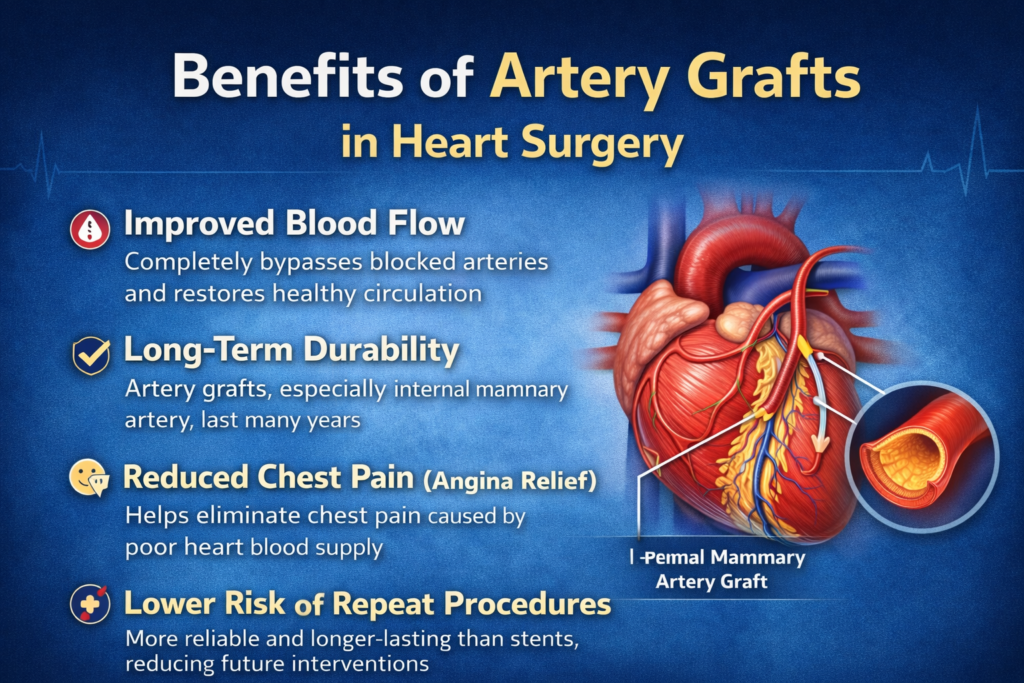
Artery grafts provide multiple advantages compared to other treatment options like stents:
- Improved blood flow: Bypasses blocked arteries completely
- Long-term durability: Especially with internal mammary artery grafts
- Reduced chest pain: Helps relieve angina in patients with severe heart disease
- Lower risk of repeat interventions: Grafts often last longer than stents
For patients with complex heart problems, artery grafts offer a reliable solution that can improve quality of life and overall heart function.
Risks and Safety Considerations
Like all heart surgery, artery graft procedures carry some risks. However, when performed by an experienced heart surgeon in Lahore, such as Dr. Omar Aziz Rana, complications are rare. Here are some possibly included risks of this procedure:
- Infection at the incision site
- Bleeding during or after surgery
- Irregular heart rhythm
- Blood clots in the graft
- Temporary chest pain or discomfort
Careful patient selection, advanced surgical techniques, and post-operative monitoring help minimize these risks.
Recovery After Artery Graft Surgery
Recovery after artery graft surgery varies depending on the number of grafts and overall patient health. Typical recovery includes:
- Hospital stay: Usually 5-7 days for monitoring and initial recovery
- Medications: Blood thinners, cholesterol-lowering drugs, and other heart medications
- Lifestyle changes: Heart-healthy diet, exercise, and quitting smoking
- Follow-up visits: Regular check-ups with your heart specialist doctor
Most patients gradually return to normal activities within a few weeks, though full recovery can take a few months.
Success Rate and Long-Term Outcomes
Artery grafts have a high success rate in treating severe coronary artery blockages. Studies show that using arterial grafts, especially the internal mammary artery, provides:
- Long-lasting patency and blood flow
- Reduced recurrence of chest pain
- Improved exercise capacity and heart function
- Lower need for repeat heart surgery
Patients who adhere to lifestyle changes and prescribed medications achieve the best long-term outcomes.
Final Thoughts
Artery grafts are an important component of advanced heart surgery, offering patients a reliable method to restore blood flow and improve heart health. For individuals with severe coronary artery disease or complex heart problems, consultation with a highly skilled heart specialist in Lahore like Dr. Omar Aziz Rana can help determine if artery graft surgery is the right choice.
Timely intervention, expert care, and adherence to post-operative guidance can significantly improve long-term outcomes and quality of life for heart patients.