Rotablation angioplasty, also known as ‘rotablator angioplasty’, is an advanced rotablation procedure used to treat severely calcified or complex blockages in the coronary arteries. While it is highly effective at restoring blood flow, understanding the risks, complications, and recovery process is crucial for patients.
If you or a loved one is considering this specialised procedure, speaking with a skilled heart specialist like Omar Aziz Rana can assure safety and the best results.
Potential Risks and Complications of Rotablation Angioplasty
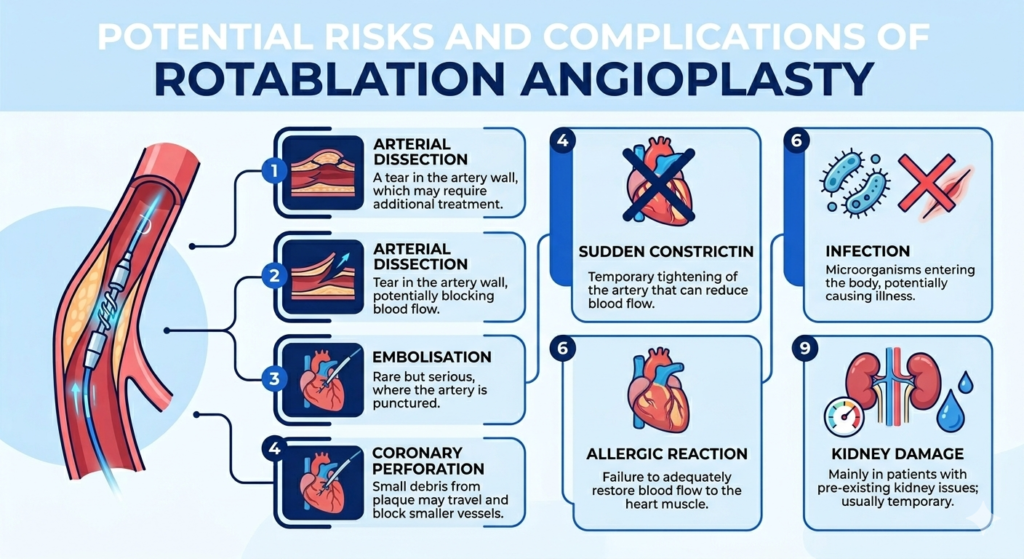
A rotablation angioplasty technique carries some risks, like any cardiac intervention, but when performed by a skilled interventional cardiologist, serious complications are uncommon. The most notable and frequent risks include the following:
- Arterial dissection: A tear in the artery wall, which may require additional treatment.
- Coronary perforation: Rare but serious, where the artery is punctured.
- Embolisation: Small debris from plaque may travel and block smaller vessels.
- Coronary spasm: Temporary tightening of the artery that can reduce blood flow.
- No revascularisation: In some cases, the artery may not be fully opened.
- Infection: Risk is low but possible at the access site.
- Allergic reaction: Rare reactions to contrast dye used during the procedure.
- Kidney damage: Mainly in patients with pre-existing kidney issues; usually temporary.
Patient Tip: Most of these risks are minimised through careful planning, modern equipment, and post-procedure monitoring.
Is Rotablation Angioplasty Dangerous?
Many patients ask, “Is rotablation dangerous?” While it is a more complex form of angioplasty, studies show that with skilled cardiologists, rotablation angioplasty is safe and highly effective for complex blockages.
Compared to standard balloon angioplasty, rotablation has a slightly higher procedural complexity but often succeeds where conventional angioplasty may fail, particularly in severely calcified coronary artery disease.
Recovery Timeline and Patient Tips
Recovery after a rotablator procedure is generally quick, but careful monitoring is essential for long-term success.
1. Immediate Recovery (First 24–48 Hours)
- Patients are usually monitored in the hospital for a few hours post-procedure.
- Heart rate, blood pressure, and access site are checked regularly.
- Mild soreness or bruising at the catheter insertion site is normal.
2. Short-Term Recovery (First 1–2 Weeks)
- Gradually increase light activities.
- Avoid heavy lifting or strenuous exercise.
- Continue prescribed medications to prevent clotting and reduce heart strain.
3. Long-Term Recovery (Weeks to Months)
- Follow-up visits with your heart specialist ensure arteries remain clear.
- Maintain a heart-healthy lifestyle: balanced diet, regular exercise, and stress management.
- Monitor for warning signs, such as chest pain, shortness of breath, or unusual fatigue, and contact your cardiologist immediately if these symptoms occur.
Essential Patient Tips
- Take Medications on Time: Follow your prescribed medicines carefully, especially blood thinners and heart medications.
- Watch for Symptoms: Contact your cardiologist if you notice chest pain, shortness of breath, dizziness, or swelling at the catheter site.
- Care for the Access Site: Keep the area clean and dry, and monitor it for signs of redness or discharge.
- Follow a Heart-Healthy Lifestyle: Eat a balanced diet, stay active as advised, and manage stress.
- Stay Hydrated and Limit Alcohol/Caffeine: Proper hydration supports recovery, while excess alcohol or caffeine can affect your heart.
- Attend Follow-Ups: Regular visits with your heart specialist ensure your arteries stay healthy and recovery stays on track.
How to Minimize Risks and Recover Well After Rotablation
The safest way to undergo a rotablation angioplasty is with an experienced interventional cardiologist who understands complex coronary blockages.
Omar Aziz Rana specialises in advanced rotavator procedures, offering the following:
- Expertise in managing complex coronary artery disease
- Modern equipment and precision techniques to minimize procedural risks
- Comprehensive post-procedure monitoring and recovery guidance
- Personalized patient education and lifestyle counseling
Choosing a skilled heart specialist in Lahore can significantly reduce the likelihood of complications and improve long-term heart health.