Treating blocked arteries in the heart isn’t always as simple as putting in a stent. In some patients, the arteries harden due to a significant build-up of calcium, which makes standard angioplasty less effective. In these cases, the rotablation procedure is used to alter the blockage and prepare the artery for successful stent placement.
But how do you know this advanced treatment is the right choice for you? A qualified heart specialist sees beyond symptoms and decides on detailed diagnostics.
What Is a Rotablation Procedure?
Rotablation is a specialised procedure used to treat severely calcified coronary arteries. It does more than just remove the blockage; it helps soften hardened plaque, allowing it to be effectively treated.
In practice, this means the artery is prepared prior to inserting a stent, resulting in better expansion and long-term outcomes.
Why Is Rotablation Needed?
Not every blocked artery can be treated in the usual way. Sometimes the artery walls get stiff, and balloons or stents can’t expand properly. A heart specialist may consider rotablation when
- The artery is heavily calcified
- Balloon angioplasty does not fully open the blockage
- Stent placement is difficult or unsafe
This approach allows doctors to treat cases that would otherwise remain challenging or incomplete.
What Happens During the Rotablation Procedure?
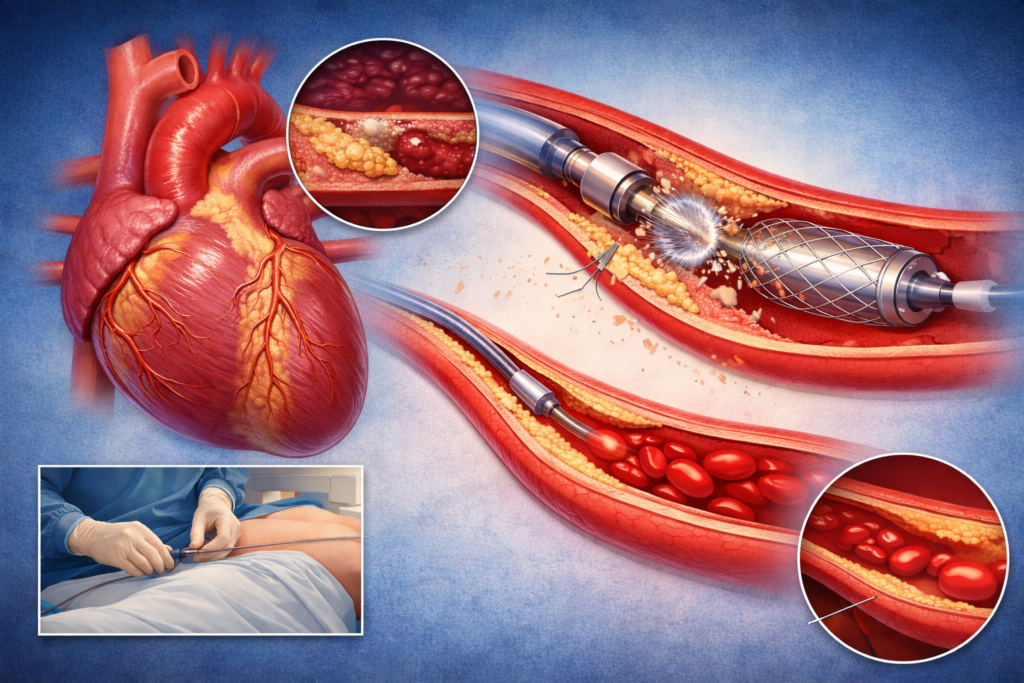
During the rotablation, a thin catheter is threaded into the blocked artery. Then, a tiny, high-speed rotating burr is used to grind the calcium deposits down to a microscopic size. When the blockage is modified, the artery is treated with angioplasty and stenting.
The procedure is performed in a controlled environment, and patients are usually sedated for comfort. Most people don’t feel pain during the procedure.
Who Needs a Rotablation Procedure?
This treatment is not routine; it is recommended only in specific, complex cases. A heart specialist may advise the rotablation procedure for patients who
- Have severely calcified coronary artery disease
- Have had unsuccessful angioplasty attempts
- Require precise stent placement in rigid arteries
- Are older and have long-standing arterial stiffness
In simple terms, it is used when standard treatments are unlikely to work effectively on their own.
Key Symptoms That May Lead to Further Evaluation
Symptoms of calcified artery disease often resemble general heart problems, which is why diagnosis is essential. You may need further investigation if you experience:
- Ongoing chest discomfort or angina
- Shortness of breath during routine activity
- Unusual fatigue
- Symptoms that persist despite medication
While these signs don’t directly confirm the need for rotablation, they indicate that a deeper evaluation is required.
How a Heart Specialist Determines the Need
The decision for a rotablation procedure is based on detailed clinical findings, not just symptoms.
Coronary Angiogram
This is the primary test used to identify:
- The severity of the blockage
- The exact location
- The presence of calcium buildup
Intravascular Ultrasound (IVUS)
In more complex cases, this imaging tool provides a closer look at:
- Thickness of calcium deposits
- Structure of the artery
Response to Initial Treatment
If balloon angioplasty fails to open the artery properly, it strongly indicates the need for rotablation. This step-by-step evaluation ensures that the procedure is recommended only when truly necessary.
Conditions Treated with Rotablation
The rotablation procedure is mainly used in cases involving the following:
- Severe coronary artery disease
- Calcified or rigid arterial blockages
- Complex or multi-vessel disease
It expands treatment possibilities in cases where traditional methods are not sufficient.
Benefits of the Rotablation Procedure
This technique has obvious advantages for the right patients. This improves the efficacy of stenting and the restoration of blood flow.
Key benefits include the following:
- More successful stent placement
- Improved artery expansion
- Better outcomes in complex cases
Recovery After Rotablation Angioplasty
Recovery is generally straightforward and similar to other minimally invasive heart procedures. Most patients:
- Stay in the hospital for a short period
- Resume daily activities gradually
- Require medications for heart protection
Long-term recovery depends not just on the procedure but also on lifestyle changes such as diet, exercise, and regular follow-ups with a heart specialist.
Expert Care You Can Trust
Advanced procedures like rotablation require precision and experience. Dr Omar Aziz Rana, a skilled heart specialist, specialises in treating complex coronary artery disease using advanced techniques, including the rotablation procedure.
His approach to treatment is to provide safe, effective, and personalised treatment plans for every patient from accurate diagnosis to post-treatment care. If you have been told that your arteries are heavily calcified or that the usual angioplasty might not be sufficient, a specialist opinion will clarify your options.
Take Control of Your Heart Health
Persistent symptoms should never be ignored, especially when standard treatments are not working as expected. The rotablation procedure offers a solution for complex cases, but the key is timely and accurate diagnosis.
Book a consultation with Dr Omar Aziz Rana today to get expert guidance and the right treatment plan for your condition. Your heart deserves precise care and the right decision at the right time.