Severe coronary artery disease with heavy calcium buildup can make standard angioplasty less effective. In such complex cases,rotablation angioplasty offers a specialized solution that is designed to prepare rigid coronary arteries for successful heart stent surgery safely.
Understanding how this procedure works, who it is suitable for, and what recovery involves can help patients make confident treatment decisions. If you or a loved one has been diagnosed with coronary heart disease, the information below explains everything in clear and simple terms.
What Is Rotablation Angioplasty?
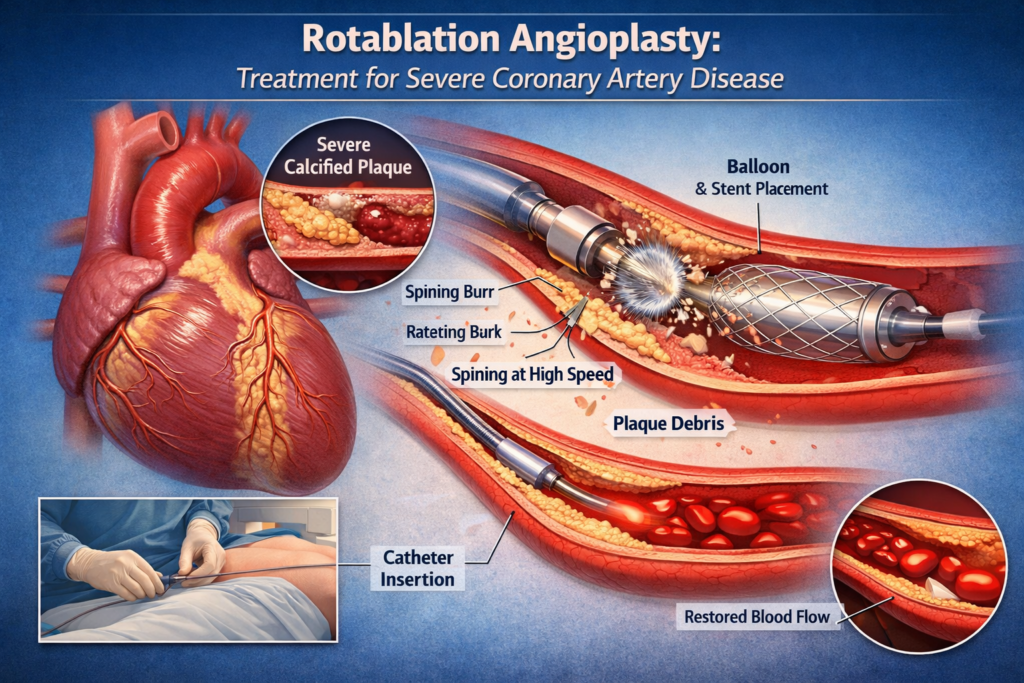
Rotablation angioplasty is an advanced interventional cardiology technique used to treat severely calcified blockages in the coronary arteries. In patients with advanced coronary artery disease, calcium buildup can make the heart arteries hard and narrow, preventing proper expansion during routine angioplasty or heart stent surgery.
In such complex situations, coronary rotablation helps prepare the artery by modifying hardened plaque. A specialized device called a rotablator is used to gently break down calcium deposits, allowing safe and effective stent placement and improving blood flow to the heart muscle.
For selected patients, it offers a minimally invasive alternative to extensive heart surgery.
Why Is Rotablation Angioplasty Needed in Severe Coronary Artery Disease?
Severely calcified coronary arteries are difficult to treat with conventional balloon angioplasty alone. When the artery wall becomes rigid due to calcium deposits, balloons may not fully expand the blockage, increasing the risk of incomplete treatment.
When Is the Rotablation Procedure Recommended?
The rotablation procedure is typically considered when:
- The coronary artery is heavily calcified
- Balloon angioplasty cannot adequately expand the lesion
- Stent delivery during heart stent surgery is difficult
- The patient is at high risk for major heart surgery
By carefully modifying calcified plaque, the procedure improves the chances of successful stent placement and reduces the likelihood of repeat interventions.
Who Is a Suitable Candidate for Rotablation Angioplasty?
Not every patient with coronary artery disease requires this advanced approach. It is generally reserved for complex cases where calcification limits the effectiveness of routine treatment.
Patients Who May Benefit Include:
- Individuals with severe calcification in the heart arteries
- Elderly patients with stiff and narrowed vessels
- Patients who are not ideal candidates for bypass or other heart surgery
- Those with previously unsuccessful angioplasty
A thorough evaluation by an experienced heart specialist or heart specialist in Lahore is essential to determine whether rotablation angioplasty is the most appropriate treatment option. Choosing the best heart specialist in Lahore ensures both safety and optimal outcomes.
How Is the Rotablation Procedure Performed?
Rotablation angioplasty is performed in a specialized cardiac catheterization laboratory under local anesthesia. It is a minimally invasive procedure that does not require opening the chest.
Step-by-Step Overview
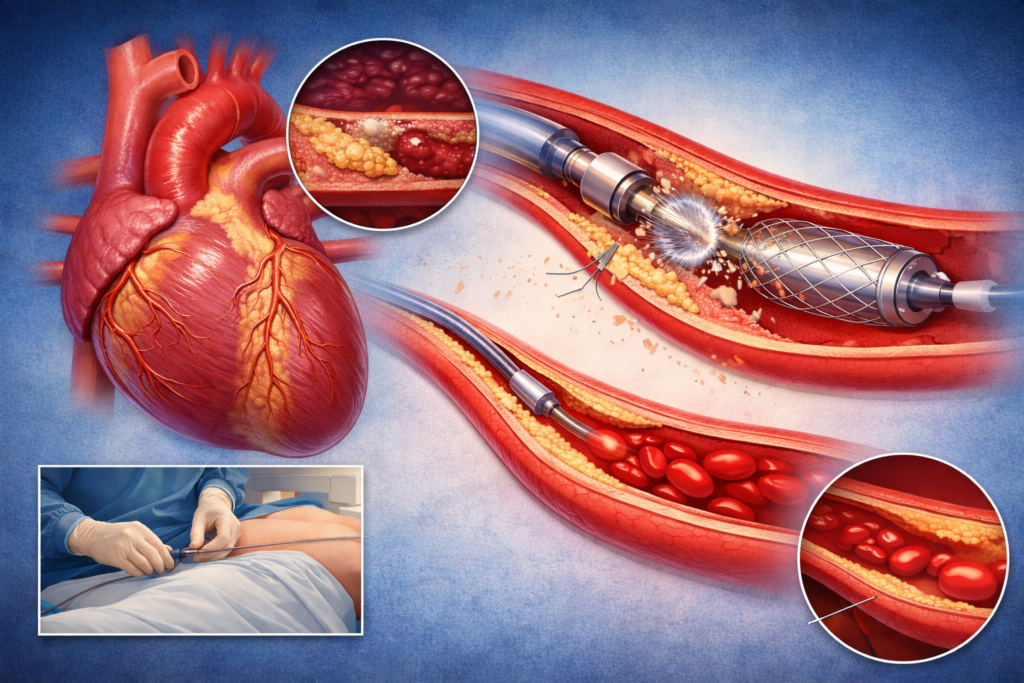
- A thin catheter is inserted through the wrist or groin and guided to the blocked coronary artery.
- A small diamond-coated burr attached to the rotablator rotates at high speed to break down hardened calcium into microscopic particles
- Once the artery is adequately prepared, balloon dilation is performed.
- A stent is then placed to restore proper blood flow.
Most patients require a short hospital stay for monitoring after the procedure. Compared to traditional heart surgery in Pakistan, recovery is significantly faster.
Benefits of Rotablation Angioplasty
Rotablation angioplasty provides important advantages in complex coronary artery disease cases. It improves the effectiveness of heart stent surgery and improves procedural success in heavily calcified arteries.
Key Benefits Include:
- Improved stent expansion in rigid arteries
- Reduced procedural failure in calcified lesions
- Minimally invasive approach
- Shorter recovery time compared to open-heart surgery
- Lower overall surgical trauma
For patients with advanced heart disease, this technique significantly increases the success rate of coronary interventions.
Rotablation vs Bypass Surgery: Understanding the Difference
Patients often ask about rotablation vs bypass and which option is better. The answer depends on the severity and pattern of coronary artery disease.
Bypass is a major heart surgery that creates a new pathway for blood flow around blocked arteries. Rotablation angioplasty, on the other hand, is performed through a catheter without open surgery.
Rotablation Is Generally Preferred When:
- The blockage is localized but heavily calcified
- The patient carries a high surgical risk
- A minimally invasive solution is clinically suitable
The final treatment decision should always be made after careful evaluation by a qualified heart doctor.
Recovery After Rotablation Angioplasty
Recovery after rotablation angioplasty is similar to standard angioplasty procedures. Most patients stay in the hospital for 24 to 48 hours for observation.
Post-Procedure Care Includes:
- Taking prescribed blood-thinning medications regularly
- Monitoring blood pressure and cholesterol levels
- Following a heart-healthy diet
- Attending scheduled follow-up visits with a heart specialist
Long-term success depends heavily on lifestyle changes and proper medical management to prevent further progression of coronary artery disease.
Risks and Safety Considerations
Although rotablation angioplasty is considered safe when performed by experienced cardiologists, it carries certain procedural risks, as with any heart surgery.
Possible Risks May Include:
- Artery injury
- Temporary irregular heart rhythms
- Slow blood flow during the procedure
- Bleeding at the catheter insertion site
With appropriate patient selection and expert care, the benefits of the procedure usually outweigh the risks.
Success Rate and Long-Term Outcomes
Rotablation angioplasty has demonstrated high procedural success rates, particularly in experienced cardiac centers managing complex coronary artery disease.
Patients Often Experience:
- Relief from chest pain
- Improved exercise capacity
- Better overall heart function
- Reduced need for repeat procedures
Long-term outcomes are strongly influenced by medication adherence, regular follow-ups, and sustained lifestyle modifications.
Final Thoughts
Rotablation angioplasty is a highly specialized solution for patients with severe calcified coronary artery blockages. For individuals who are not ideal candidates for conventional angioplasty or major heart surgery, it offers a safe and effective minimally invasive alternative.
If you are experiencing symptoms of coronary artery disease or have been advised to undergo heart stent surgery, early consultation with a qualified heart doctor or heart specialist in Lahore is essential. Timely intervention and expert cardiac care significantly improve long-term heart health and overall quality of life.