The rotational procedure is a more advanced type of angioplasty used to treat coronary arteries with high calcium buildup. It breaks down hardened plaque with a high-speed rotating burr, making it easier to place stents in the proper locations.
This method is especially useful in complicated heart cases where standard methods may not be effective. However, as with any other interventional procedure, some risks must be managed by experts.
Common Complications Associated with Rotablation Procedure
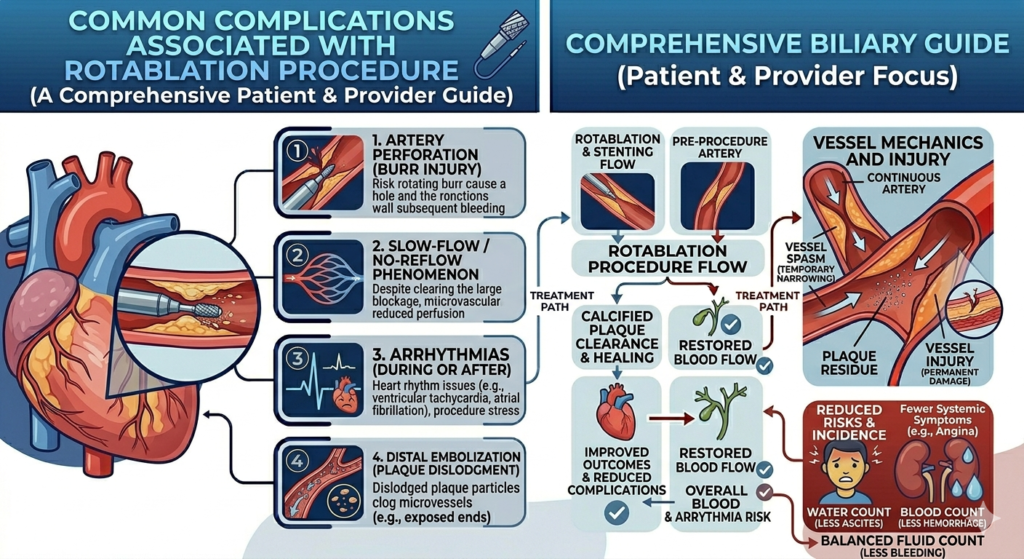
While the rotablation procedure is highly effective, understanding potential complications helps patients make informed decisions. Some possible complications include:
- Artery perforation due to the rotating burr
- Slow blood flow or no-reflow phenomenon
- Arrhythmias during or after the procedure
- Dislodged plaque particles affect smaller vessels
- Vessel spasm or injury
These complications are uncommon but can occur, especially in complex or high-risk patients.
Why Expertise Matters in Managing Rotablation Complications
Managing these complications requires not only advanced equipment but also extensive clinical experience. This is where choosing the right cardiologist becomes critical.
An experienced specialist ensures the following:
- Accurate patient selection
- Precise procedural technique
- Immediate identification of complications
- Effective on-the-spot management
With the right expertise, risks are significantly minimised, and outcomes improve.
How Complications Are Effectively Managed
Modern cardiac centres are well-equipped to handle complications during the rotablation procedure. Management strategies include:
- Advanced imaging guidance for precision
- Medications to control blood flow and rhythm
- Support devices in high-risk cases
- Emergency intervention readiness, if needed
Timely response and proper planning play a crucial role in ensuring patient safety.
Recovery and Post-Procedure Monitoring
After the procedure, patients are closely monitored to detect any delayed complications. Recovery typically involves:
- Short hospital stay
- Medication management
- Lifestyle modifications
- Regular follow-ups
A structured recovery plan helps ensure long-term success.

Choosing the Right Specialist for the Rotablation Procedure
Expertise is non-negotiable when dealing with complex cardiac interventions like rotablation.
Dr Omar Aziz Rana is recognized for his experience in advanced cardiac procedures, including the rotablation procedure. His patient-focused approach, combined with precision-driven techniques, ensures that even high-risk cases are managed with confidence and care.