Rotablation angioplasty is a cutting-edge procedure that opens blocked coronary arteries. There are certain circumstances where plaque deposits clogging the arteries are too challenging for standard angioplasty. In standard angioplasty, the artery may not fully expand due to hardened plaque, which can obstruct proper stent expansion. If left inadequately treated, the condition can lead to serious complications.
Rotablation can safely break down stubborn deposits in the artery to make it wider, helping doctors place stents more accurately during an angioplasty. The rotablation procedure is a treatment option for patients who suffer from advanced coronary artery disease. This procedure provides a minimally invasive option with fewer complications and better results.
What is Rotablation Angioplasty?
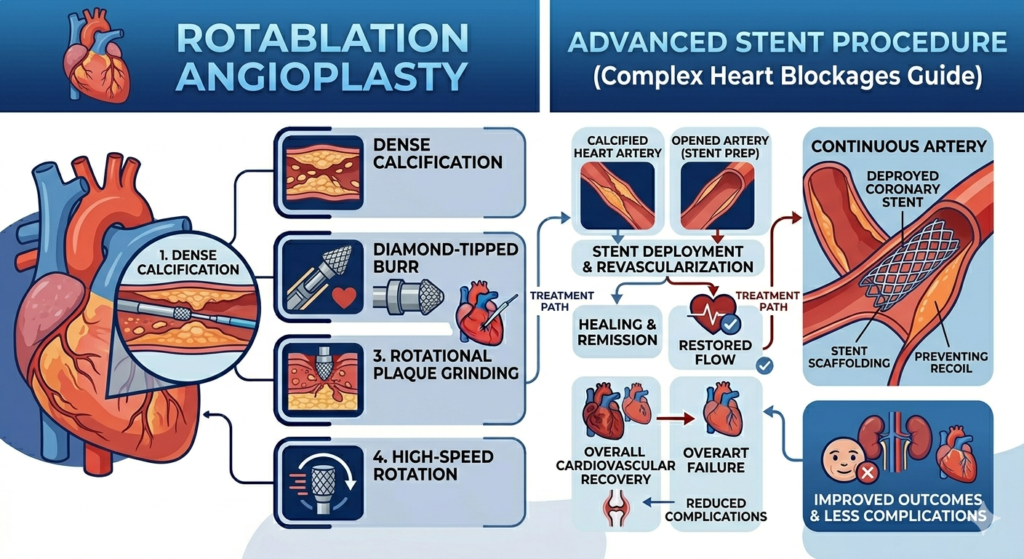
Rotablation angioplasty is a treatment for calcium buildup in the arteries that lead to the heart. Also known as rotational atherectomy, this procedure uses a catheter to treat dense calcium deposits in your coronary arteries.
Unlike standard angioplasty, which uses a balloon to widen arteries, this technique:
- Uses a rotablator (diamond-tipped burr) to grind hardened plaque gently.
- Modifies the artery structure to allow smoother stent placement.
- Improves the effectiveness of subsequent angioplasty.
It is particularly useful when traditional methods cannot adequately expand the artery due to severe calcification.
When is Rotablation Recommended?
When standard rotablation procedures fail to be sufficient, rotablation angioplasty is typically advised for patients with complex coronary artery disease.
Common indications include:
- Heavily calcified coronary arteries
- Long-standing blockages resistant to balloon angioplasty
- Narrowed arteries where stents cannot expand properly
- Patients with diabetes or advanced age (higher calcification risk)
- Failed or incomplete previous angioplasty
In these cases, rotablation helps prepare the artery for a safer and more effective intervention.
How Rotablation Angioplasty Works
Understanding the procedure helps patients feel more confident and prepared. Rotablations are performed in a controlled cardiac catheterisation lab using advanced imaging.
Step-by-step procedure:
1. Preparation
Patient evaluation, imaging, and blood tests are conducted.
Local anaesthesia is administered.
2. Vascular Access
A catheter is inserted through the wrist or groin artery.
3. Imaging & Lesion Assessment
Advanced imaging identifies the severity and location of calcification.
4. Rotablation (Plaque Modification)
A high-speed rotating burr breaks down hardened plaque into microscopic particles.
These particles are safely carried away in the bloodstream.
5. Balloon Angioplasty & Stent Placement
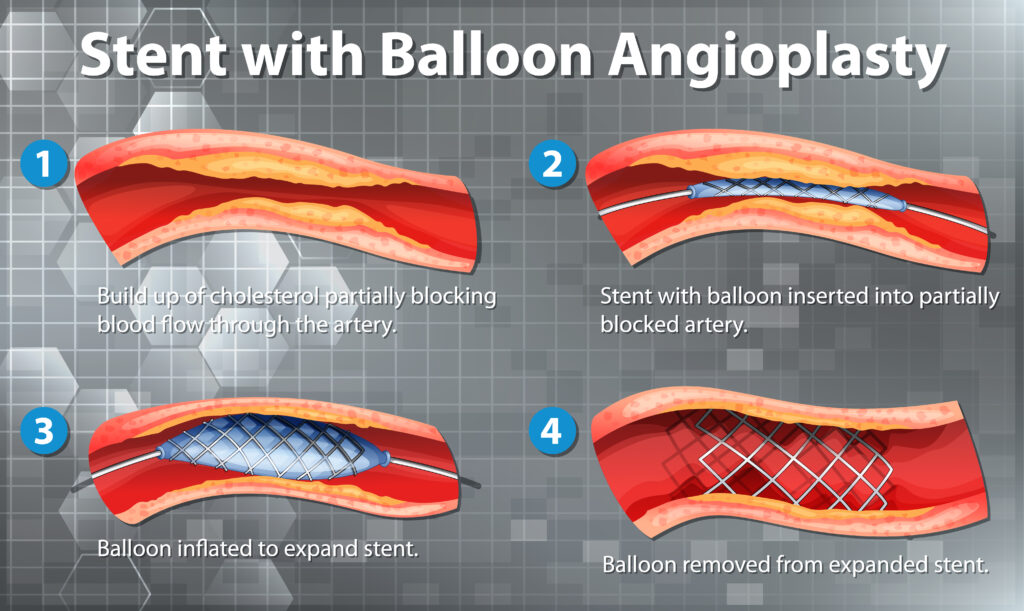
The artery is widened using a balloon.
A stent is placed to keep the artery open.
This combination allows for optimal blood flow and long-term vessel stability.
Rotablation vs Standard Angioplasty
Both rotation procedures differ significantly in application and effectiveness, even though they aim to restore blood flow. Key differences are:
Standard Angioplasty:
- Uses balloon dilation
- Best for soft or moderately hardened plaques
- May fail in heavily calcified arteries
Rotablation Angioplasty:
- Uses a rotating burr to modify calcified plaque
- Ideal for rigid, complex blockages
- Improves stent expansion and placement success
In many complex cases, rotablation is not an alternative but a necessary step before successful stenting.
Benefits of Rotablation Angioplasty
Rotablation angioplasty offers several advantages, particularly for patients with coronary artery disease who are difficult to treat.
Key benefits include the following:
- Enables treatment of severely calcified blockages
- Improves stent delivery and expansion
- Reduces the risk of incomplete angioplasty
- Minimally invasive with shorter hospital stay
- Enhances long-term blood flow and heart function
For high-risk patients, this technique significantly increases the chances of a successful outcome.
Risks and Safety Considerations
Like all cardiac procedures, rotablation carries some risks. However, when performed by experienced specialists, it is considered safe and highly controlled.
Possible risks include the following:
- Artery injury or perforation (rare)
- Irregular heart rhythm during the procedure
- Small risk of clot formation
- Temporary chest discomfort
Most complications are uncommon and are managed effectively in a specialized cardiac setting.
Recovery After Rotablation Angioplasty
Recovery is generally smooth, with most patients returning to normal activities within a few weeks. Recovery timeline:
- First 24 hours:
Monitoring in the hospital
Early mobilization may begin
- First week:
Mild fatigue or discomfort may occur.
Gradual return to light activities
- 1 to 6 months
Improved stamina and reduced symptoms
Full recovery with lifestyle and medication adherence
Important recovery tips:
- Take prescribed medications regularly (especially blood thinners)
- Follow a heart-healthy diet
- Avoid heavy exertion initially
- Attend follow-up appointments
When Should You Consult a Cardiologist?
Early consultation can prevent complications and improve treatment outcomes.
Seek medical advice if you experience:
- Persistent chest pain or pressure
- Shortness of breath during routine activity
- Fatigue or reduced exercise tolerance
- Known history of coronary artery disease
Timely diagnosis ensures access to advanced treatments like rotablation angioplasty when needed.
Advanced Cardiac Care for Complex Angioplasty
Managing complex coronary artery disease requires expertise, precision, and advanced technology. Rotablation should be performed by experienced interventional cardiologists at a well-equipped cardiac centre.
With the right approach, patients can benefit from:
- Accurate diagnosis
- Personalized treatment planning
- Improved procedural success
- Better long-term heart health
Dr. Omar Aziz Rana is a highly experienced interventional cardiologist known for managing complex coronary artery disease and performing advanced procedures like rotablation angioplasty with precision. His expertise in handling high-risk and calcified coronary cases, combined with the use of modern cardiac technologies, ensures that patients receive safe, effective, and personalised care.
Choosing an experienced specialist like Dr. Omar Aziz Rana can significantly improve procedural outcomes and overall heart health.
Frequently Asked Questions
Is rotablation angioplasty safe?
Yes, rotablation angioplasty is considered safe when it is performed by experienced cardiologists, especially in specialized cardiac centres.
How long does the procedure take?
Typically, the procedure takes 1–2 hours, depending on the blockage’s complexity.
What is the recovery time?
After the procedure, most patients recover within a few weeks, with a noticeable improvement in symptoms over time.
Is rotablation better than standard angioplasty?
It is not “better” in all cases, but it is essential for treating heavily calcified arteries where standard angioplasty may not work.
Are there alternatives to rotablation?
Other alternatives to rotablation exist, but rotablation is often preferred for severe calcification due to its precision and effectiveness.