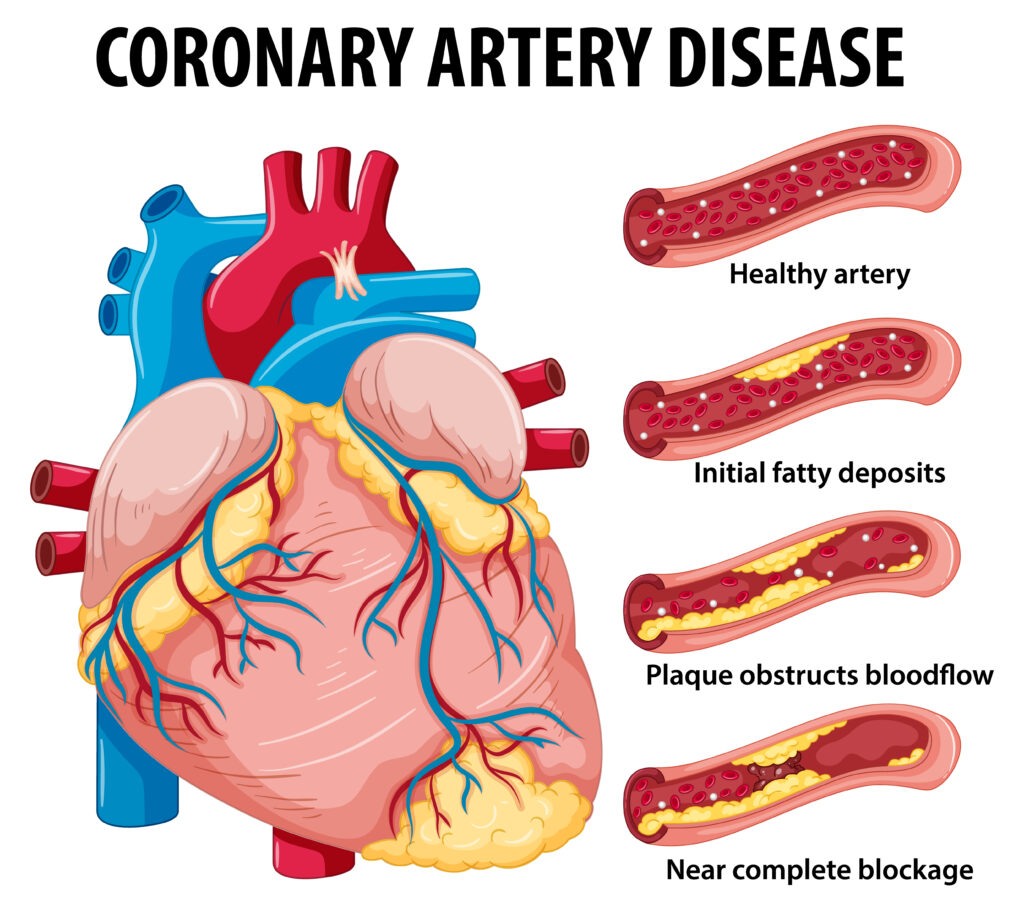
When coronary arteries are severely narrowed with hard calcium build-up, routine angioplasty may not suffice to restore proper blood flow. In such complicated cases, rotablation angioplasty is an advanced treatment option for heavily calcified heart blockages.
This technique is used in the cardiac practice of Dr. Omar Aziz Rana for selected patients with complex coronary artery disease, where precision and expertise are critical for success.
Understanding Rotablation Angioplasty
Rotablation is a special heart procedure used to treat hardened calcium deposits within the coronary arteries.
Rather than dilating the obstruction, a high-speed rotating device is used to gently modify the calcified plaque. This process helps to prepare the artery for stent placement and improve blood flow to the heart muscle.
It is particularly useful when conventional balloon angioplasty cannot cross or effectively open the occlusion.
What Happens in Coronary Rotablation?
In coronary rotablation, a small diamond-coated device spins at high speed to break up hard calcium deposits inside the artery.
This allows:
- Better access to severely blocked arteries
- Improved preparation for stent placement
- Safer treatment of complex coronary disease
With Dr. Omar Aziz Rana, this procedure is performed with careful monitoring and advanced imaging support to provide accuracy and safety.
What Does Single-Operator Rotablation Mean?
Single-operator rotablation angioplasty is a well-choreographed protocol where a skilled interventional cardiologist performs the procedure with complete procedural control.
This approach supports:
- Precise decision-making during critical steps
- Streamlined procedural handling
- Focused management of complex coronary anatomy
- Reduced procedural delays in high-risk cases
The method is selectively used in advanced cases of coronary artery disease under expert care.
Who Needs Rotablation Angioplasty?
Rotablation is not required for every heart patient. It is recommended in specific situations such as:
- Severe coronary artery disease with heavy calcium buildup
- Blockages that cannot be treated with standard angioplasty
- Failed previous stent or balloon procedures
- Long-standing or complex artery narrowing
- Difficult-to-cross coronary lesions
These cases need advanced intervention strategies for safe and effective management.
Benefits of Rotablation Angioplasty
When performed in suitable patients, rotablation offers these important benefits:
- Allows treatment of hard, calcified blockages
- Improves stent expansion and positioning
- Restores blood flow to the heart muscle
- May reduce the need for bypass surgery in selected cases
- Minimally invasive compared to open-heart surgery
- Enhances procedural success in complex coronary disease
Rotablation vs Bypass Surgery
In advanced coronary artery disease, treatment choice depends on the severity and distribution of blockages.
- Rotablation is minimally invasive and used for targeted calcified lesions
- Bypass surgery is recommended for widespread or multi-vessel disease
Rotablation improves the condition of the artery in selected patients to such an extent that surgery can be avoided or delayed.
What to Expect During the Procedure
A typical rotablation procedure involves the following:
- Insertion of a thin catheter through the artery
- Guiding it to the blocked coronary vessel
- Using a rotating device to modify calcium deposits
- Preparing the artery for stent placement
- Inserting a stent to maintain blood flow
For safety and accuracy, the procedure is performed under continuous cardiac monitoring.
Recovery After Rotablation
Recovery is generally faster than with surgical procedures. Most patients:
- Remain under observation for a short period
- Resume light activities within a few days
- Continue heart medications as prescribed
- Attend follow-up visits for monitoring
The recovery time depends on the overall health of the heart and the complexity of the procedure.
When Advanced Care Becomes Necessary
In some patients, coronary blockages are too hard or complex for standard treatment methods. Rotablation might be an important option in these cases to re-establish blood flow safely.
Timely evaluation helps determine whether advanced intervention is required or if alternative treatments are more suitable.
At this stage, expert clinical judgement plays a key role in deciding the safest approach.
Making the Right Treatment Decision
Heart disease treatment is always individualised. The right approach depends on:
- Severity of coronary artery blockage
- Patient’s overall heart function
- Presence of calcium in arteries
- Previous treatment history
- Risk factors and clinical conditions
A Message for Patients
If you’ve been diagnosed with severe coronary artery disease or told that your arteries are heavily blocked, it doesn’t necessarily mean that treatment options are limited.
Procedures such as rotablation have become so sophisticated that even complex heart conditions can be treated with care and precision.
Early evaluation often means better treatment outcomes and more options. Timely consultation is the most important step.
Next Step: Expert Evaluation with Dr. Omar Aziz Rana
If you have complex coronary artery disease, rotablation angioplasty may be an appropriate treatment option; however, a thorough evaluation with Dr. Omar Aziz Rana can help determine this.
Each case is analysed individually to ensure that the selected treatment protocol is safe, effective, and tailored to the patient’s condition.