When arteries become hard due to calcium buildup, standard treatments may not always be effective. In such cases, the rotablation procedure is an important option, restoring proper blood flow. Although rotablation and angioplasty are both used to treat blocked arteries, they work in different ways and are suited for different conditions. Understanding these differences helps patients make better and more informed decisions, especially in advanced cases of coronary artery disease.
Quick Comparison: Rotablation Procedure vs Angioplasty
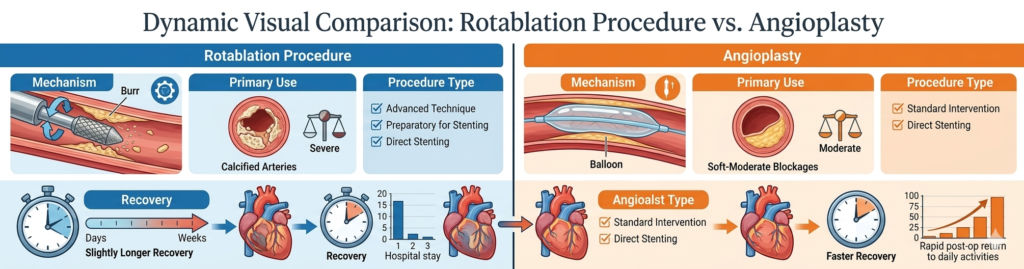
| Feature | Rotablation Procedure | Angioplasty |
| Mechanism | A rotating burr breaks calcium | A balloon compresses plaque |
| Primary use | Calcified arteries | Soft to moderate blockages |
| Procedure type | Advanced, preparatory | Standard intervention |
| Recovery | Slightly longer | Faster |
What Is the Rotablation Procedure, and How Is It Different from Angioplasty?
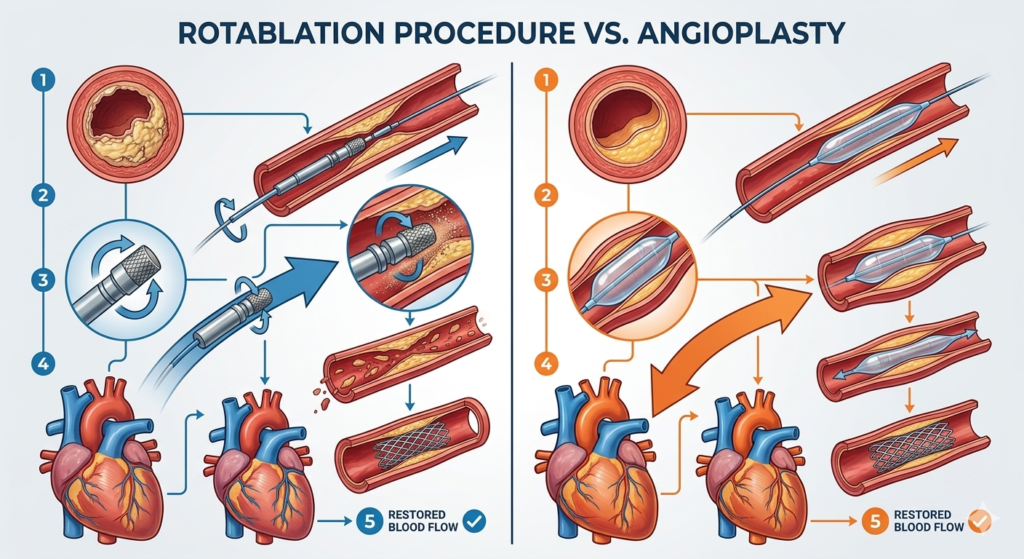
The rotablation procedure is a specialised technique for treating heavily calcified arteries. It employs a small diamond-tipped burr that spins rapidly to break down hardened plaque, making it easier to open the artery.
In contrast, angioplasty involves using a balloon to open narrowed arteries and is often followed by heart stent surgery to keep the vessel open. Dr Omar Aziz Rana typically explains the distinction in simple terms:
- Rotablation modifies hard plaque
- Angioplasty compresses softer blockages
This difference becomes critical when standard angioplasty alone cannot effectively treat the blockage.
Who Needs the Rotablation Procedure in Coronary Artery Disease?
The rotablation procedure is not for every patient. It is specifically recommended in complex cases of coronary artery disease where the arteries are heavily calcified. It is usually considered ‘rotablation’ when:
- The artery is too hard for a balloon to expand
- Previous angioplasty attempts have failed
- Imaging shows severe calcium deposits
- There is a high risk of incomplete stent placement
In such scenarios, rotablation prepares the artery for further treatment, improving overall success.
Why Is Rotablation Needed in Severe Heart Artery Blockages?
In complex coronary rotablation procedures, arteries calcify. This prevents adequate expansion during angioplasty, increasing the risk of complications. The rotablation procedure includes the following steps:
- Break down calcified plaque safely
- Allow better stent expansion during heart stent surgery
- Reduce the chances of stent failure
- Improve blood flow in complex lesions
Without this step, treatment outcomes in severe cases may be less effective.
How the Rotablation Procedure and Angioplasty Are Performed
Rotablation Procedure
The rotablation procedure begins with inserting a catheter into the artery. A high-speed rotating burr is then used to grind down calcified plaque into microscopic particles.
Dr Omar Aziz Rana ensures precision using imaging techniques, allowing controlled plaque modification before further intervention.
Angioplasty
In angioplasty:
- A balloon is inserted and inflated
- The artery widens
- A stent is often placed to maintain blood flow
Treatment Approach: Combining Rotablation with Stenting
In real-world practice, the rotablation procedure is rarely used alone. It is often followed by angioplasty and heart stent surgery. A step-by-step approach includes:
- Rotablation to modify calcified plaque
- Balloon angioplasty to expand the artery
- Stent placement to keep it open
This combined method improves outcomes, especially in advanced coronary artery disease.
Recovery Time and What to Expect After the Procedure
Recovery varies depending on the complexity of the case. After the rotablation procedure, he generally observes the following:
- Hospital stay of 1-2 days
- Gradual return to normal activities
- Medication to prevent clotting
Compared to standard angioplasty, recovery may be slightly longer but still much faster than open-heart surgery.
Key Benefits of the Rotablation Procedure
The rotablation procedure offers several advantages in complex cases:
- Effective in heavily calcified arteries
- Improves stent placement success
- Reduces procedural complications
- Enhances long-term blood flow
Dr Omar Aziz Rana often recommends it when conventional methods are not sufficient.
Outcomes and Success Rate of Rotablation vs Angioplasty
Both procedures have high success rates when used appropriately. It is observed that:
- Angioplasty works well in simpler cases
- The rotablation procedure improves success in complex lesions
- Long-term outcomes depend on the patient’s condition and follow-up care
In advanced disease, combining both methods provides better durability.

Which Treatment Is Right for You?
Choosing between angioplasty and the rotablation procedure depends on multiple factors.
The decision is typically based on the following factors:
- Severity of blockage
- Presence of calcium
- Overall heart health
- Results from a heart blockage test
Consulting a heart specialist in Lahore ensures an accurate diagnosis and a tailored treatment plan.
FAQs
Is the rotablation procedure safe?
Yes, the rotablation procedure is safe when it is performed by an experienced specialist such as Dr Omar Aziz Rana.
Is rotablation better than angioplasty?
Not necessarily. Rotablation is used when angioplasty alone is not effective due to hard plaque.
How long does the rotablation procedure take?
The procedure of rotablation usually takes about 1-2 hours, depending on the complexity of the blockage.
Will I need a stent after rotablation?
In most cases, yes. Rotablation is often followed by heart stent surgery.
Is rotablation available in Pakistan?
Yes, advanced cardiac centres offering heart surgery in Pakistan provide this procedure.